Three Changes I Made in 2025 to Achieve My Goals #growthwithme
I set a “big dreamer” goal for 2025:
2025 is my fittest year ever, evident not just in how my body looks, but how it performs.
And you know what? I achieved it. On the surface, the goal doesn’t fully conform with the S.M.A.R.T. goals formula, but it was successful because of the process goals I set and habits I established to support a “big dreamer” outcome goal that a year ago, I would have said was more than a stretch based on where I was at. There was no 6-week challenge, 75 hard (or soft), or significant extended sacrifice and hardship. In reality, it was a lot of boring, consistent practices, day after day, week after week, month after month. This year, I felt more than once like nothing in my life was changing, meanwhile, my body has been quietly evolving for months. Looking back, it’s not just comparing the photos from last year (or even years prior), it’s also thinking about the strength increases, the exercises I can do now that would have seemed impossible last year, and the way I feel day-to-day. Certain things have clicked in a way that they never have before, and it’s led to a better outcome than what I’ve experienced in the past.
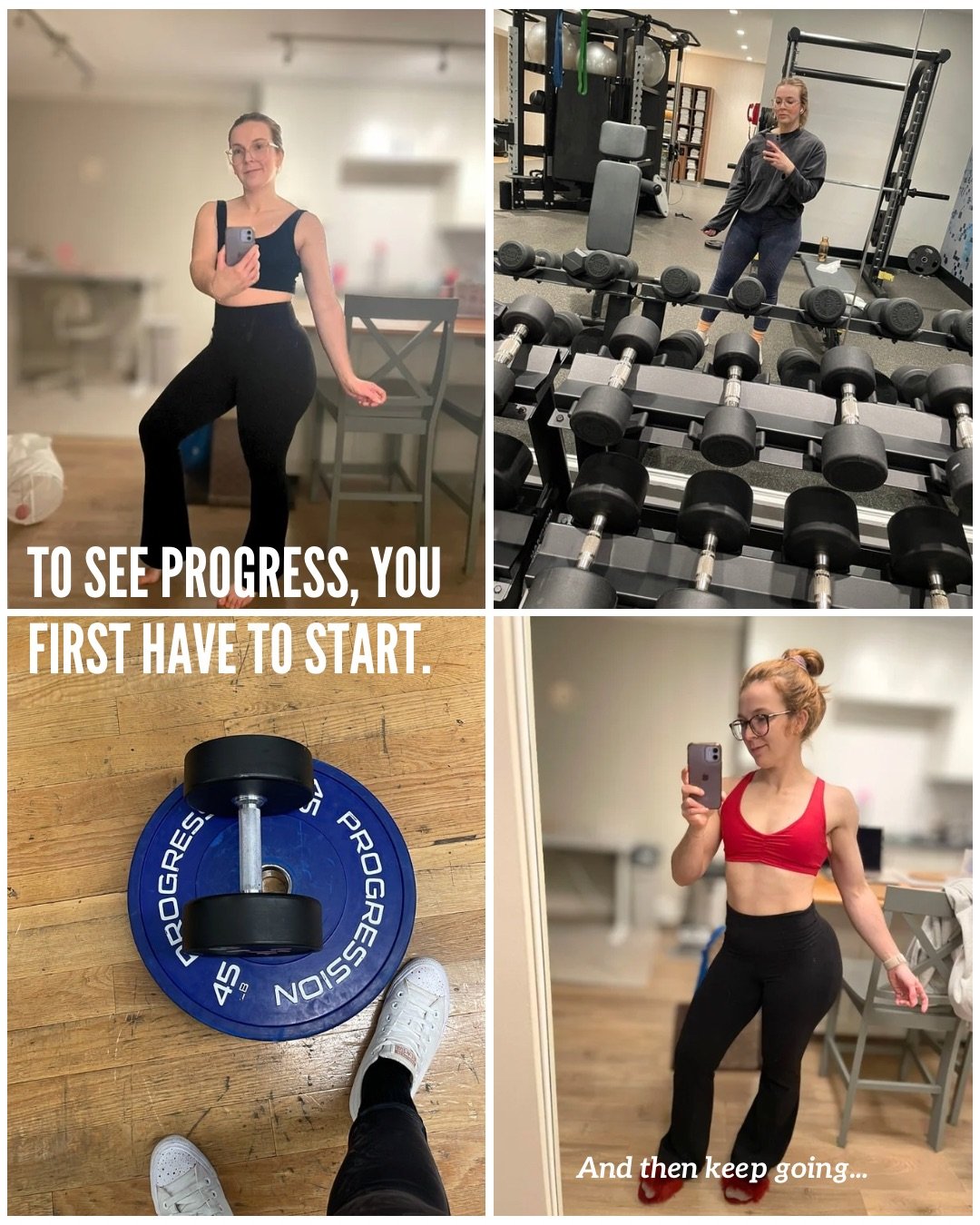
So what changed?
My big dreamer goal of 2025 being my fittest year ever, was about the outcome, but the process goals (changes) supported its realization. I made three key changes in 2025 and followed through consistently, even when I felt like the results weren’t coming.
Committed to a Consistent (and progressive) Training Program
Tracked Food and Monitored Protein
Cut out Alcohol
Committing to a Consistent (and progressive) Training Program
This kind of consistency was more than just showing up and doing random workouts. If you’re starting from not working out at all to doing a few random workouts a week, you’ll probably notice results at first, but over time, the body adapts. You may have seen that person who works out all the time but never seems to look any different. Chances are, how they look isn’t the only area that hasn’t changed or progressed. This approach is fine for maintaining where you’re at, but most of us want to see some kind of progress, whether it’s how we look and/or feel, or in what we can do.
I started small, one day per week in the gym lifting weights, which quickly turned into two. My current program looks like two days a week in the gym (upper/lower split) and then pilates, mobility, and walking another 2-3 days a week. This works for me right now, but I think it’s important to recognize we are unique and you might find a different formula that works for you.
For those two days, I follow planned exercises, sets, and reps, and track weights and progression over 8-12 weeks per block. Introducing this kind of consistency has allowed me to build actual progression into my training. It’s also motivating because the data reveals a different measure of success.
Tracking Food and Monitored Protein
It is easy to make inaccurate assumptions about what we are consuming. Whether those assumptions are over- or underestimations, if you aren’t or have never tracked your food, you are guessing. I don’t think everyone needs to track their food religiously 365 days a year to see results, but tracking is a tool that helps you better estimate what you are consuming and make informed decisions. For many people, the act of tracking influences daily choices. I first introduced tracking because I wanted to get a realistic idea of my protein intake and how to increase it. By tracking, I found I more consciously included protein in every meal.
Cutting out Alcohol
I’ve known for a while that alcohol doesn’t make me feel great. While some people may appear to tolerate it better than others, there is a lot of research on the effects of alcohol on the body. The reality is that if you have wellness, health, or fitness goals, cutting out or significantly reducing your alcohol intake will help you get closer to achieving them. Fortunately, it’s become a lot more common to cut back or cut out the booze, and there are quite a few options if you want to swap out for something zero-proof.
These are the habits that supported me and my goal, but it’s also important to recognize that your goals and the habits that best support you might look a bit different. Also, when goals change, sometimes habits need to change too. Regular evaluation and tweaking are essential to long-term success.
As I head into 2026, I’ll be evaluating my goals and what habits will help me get there. <3